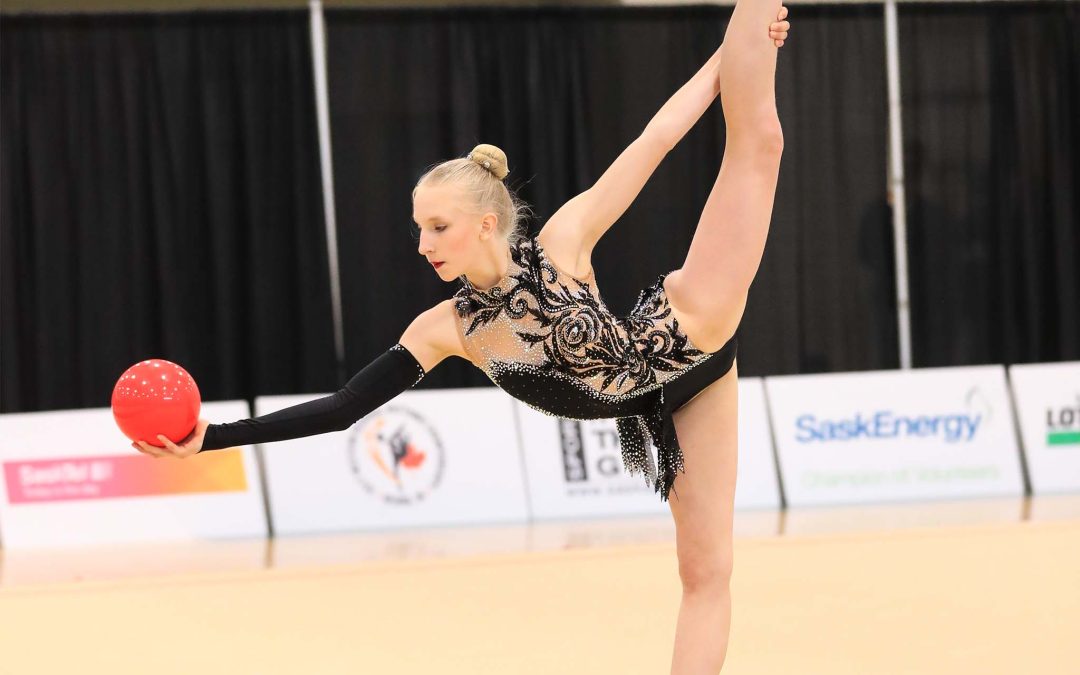
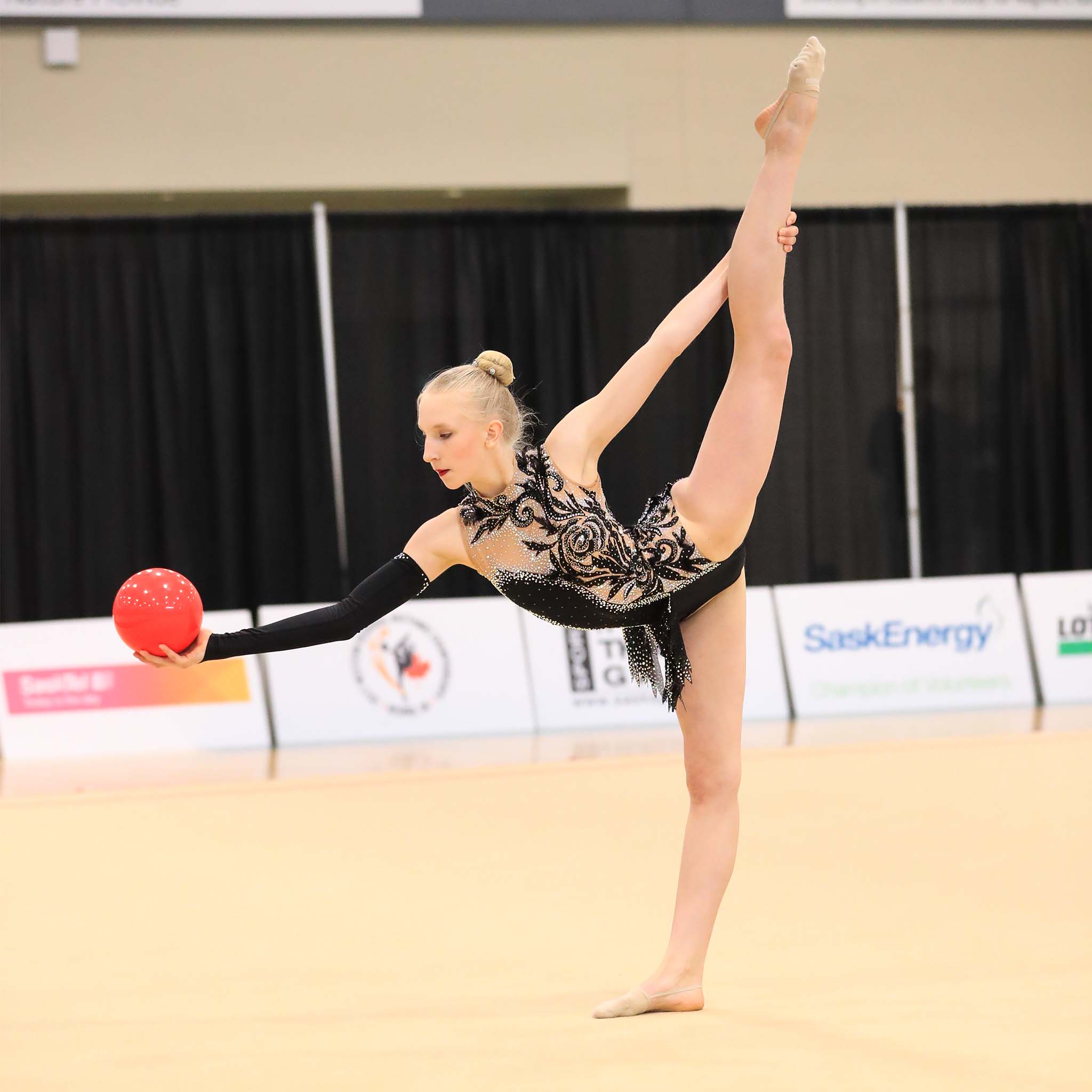
Rhythmic GymnasticsA beautiful and elegant sport, rhythmic gymnastics combines the grace of dance with the amazing gymnastic movements and brilliantly colored apparatus. Rhythmic gymnastics provides a lifetime of fun and fitness for everyone, regardless of age, sex or ability. There are several different types of rhythmic gymnastics that are offered: competitive and non-competitive, individual and group. Download the Rhythmic Technical Regulations 2010-2011
|
 The competitive structure of Rhythmic Gymnastics is organized by Provincial and National Levels. Gymnasts are catergorized according to ability and age. Technical requirements are established for routines using a specified apparatus, in a levelized program. Gymnasts may compete in individual and/or group programs. Details of the programs, eligibility and requirements are included in the Rhythmic Technical Regulations.
- Hoop
The hoop is made of wood or plastic, with an inside diameter of 65-89 cm, in proportion with the height of the gymnast.
- Ball
The ball is made of rubber or plastic, with a diameter of 14-20 cm, in proportion to the height of the gymnast. The ball should be large enough so it cannot be grasped by the fingers, but has to rest in the hand and be controlled by balance. The minimum weight for a ball is 400 grams.
- Clubs
The clubs are made of wood or plastic with a length of 34-50 cm, and weigh a minimum of 150 grams each.
- Ribbon
The stick length is 40-60 cm, proportionate to the height of the gymnast, and is made of wood, plastic, bamboo or fibreglass. The ribbon is most often of satin or nonstretch material, being 3-6 cm in width, and having a length of 4-6 metres. The ribbon is fastened to the stick by means of a swivel.
- Rope
The rope may be made of hemp or any synthetic material. The length is proportionate to the height of any gymnast. It is knotted at the ends.
|
| Last Updated on Tuesday, 14 June 2011 12:23 |
 Non-competitive performing rhythmic gymnastics is available for all age ranges, abilities and program goals. These programs are geared towards having fun, developing fitness, and acquiring fundamental skills using a variety of apparatus (i.e) ribbons, balls, and hoops. Gymnastics provides a solid foundation of important skills such as balance, strength, flexibility and overall body awareness that can be transferred into other athletic activities. There are various activities for those who are interested in non-competitive rhythmic gymnastics:
- Annual Regional or Provincial Gymnaestradas
Gymnastics Saskatchewan holds Regional or Provincial Gymnaestradas every year which are gala events for performing teams. Gymnaestrada means a festival of gymnastics.
- National and International Gymnaestradas
All with the focus on participation. These events occur every four years. Gymnasts participating in these gymnaestradas are generally senior and experienced gymnasts. Each province creates a performing group that audtions for a space in the international event by attending the National Gymnaestrada the year before. This group is made up of gymnasts from across the province.
- Challenge Cup
Held annually at the end of the season. This is an adjudicated event for group performances (under 12, 12-14, 15-17 and 18 & over). Details are listed in the Rhythmic Technical Regulations. The Challenge Cup is held earlier in the day and is followed up with an evening Gala performance. It is open to clubs across Western Canada.
- Other Galas
Any club may host a gala event and invite other clubs to participate. Performing groups have the opportunity to show their skills at the Northern Gala which is held in Saskatoon in the spring of each year
|
| Last Updated on Tuesday, 14 June 2011 12:26 |
|
|
|
| |